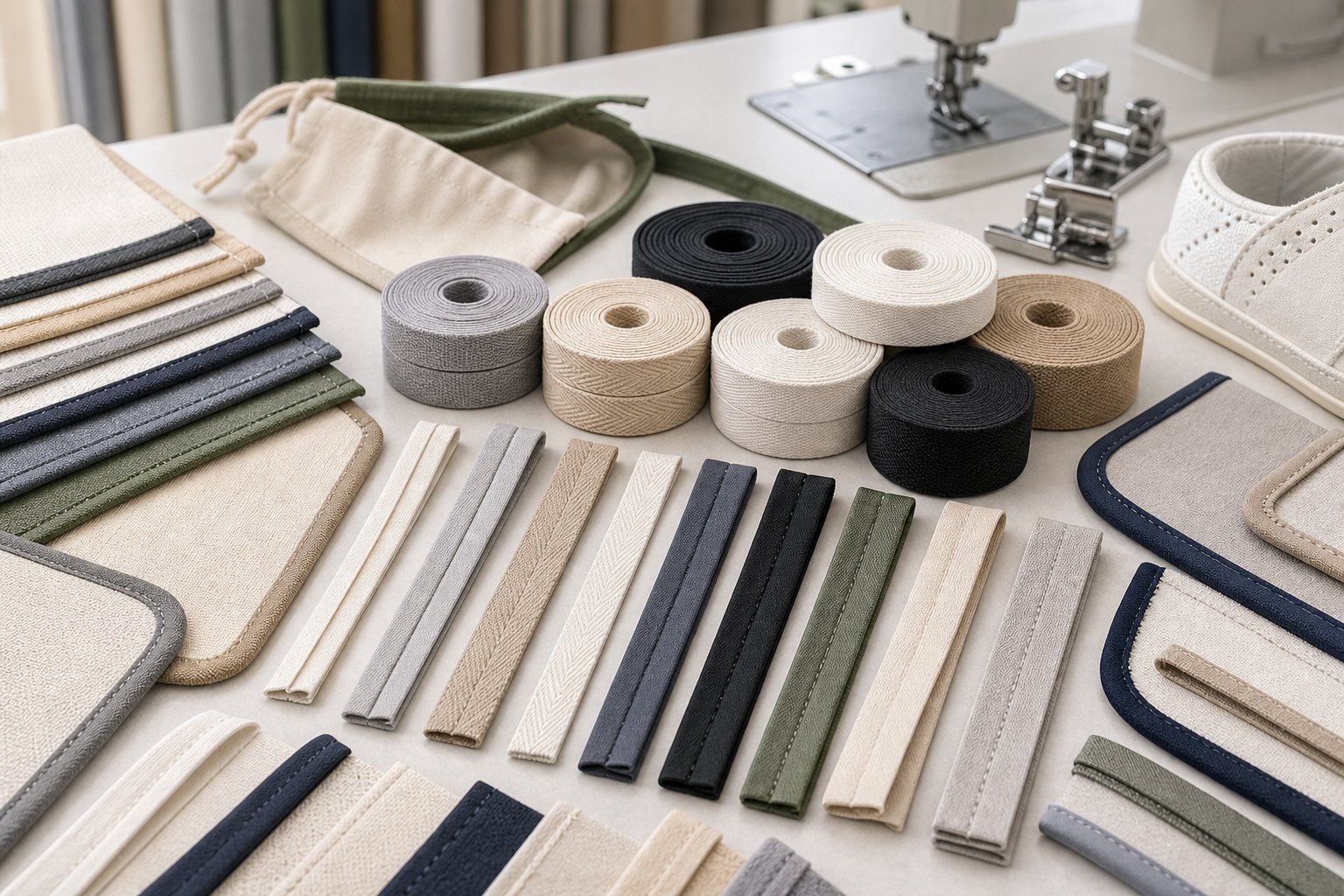
Where will the edging be used?
Garment edges, hats, cloth bags, backpacks, shoe tongues, shoe collars, gaskets, storage bags and cloth products may all use binding tape or piping tape. It doesn’t just decorate, it also protects the edges of the fabric, embellishes the edges, adds durability, and makes the product look cleaner.
Ready-made clothing usually wants to be thin, soft, and natural in color; luggage and shoe materials will pay more attention to wear resistance, stiffness, and lines after sewing. If you want to cover corners or thick materials, if the tape is too hard or too thick, it may warp; if it is too thin, it may not hold the edge.
What about width, thickness and hemming method?
| Flat woven edge tape | Suitable for general edge closing, bag openings, cloth products and products that require a simple appearance. |
|---|---|
| Hemmed or pre-folded tape | It is helpful for sewing positioning, but you need to confirm the folded width, main fabric thickness and actual sewing equipment. |
| Thin and soft specifications | Ideal for ready-to-wear, hats, products that sit close to the body or require a soft edge. |
| Thicker and stiffer specifications | Suitable for bags, shoes, gaskets and hemming locations that require support. |
| special color or texture | Use the main fabric, leather, brand color, or sample direction to set the tape color. The allowable range of color difference should be confirmed before mass production. |
What details should be confirmed before sewing?
When it comes to binding tape problems, it's often not that the material alone is bad, but that the main fabric, tape, and sewing method are not looked at together. If the main fabric is too thick, the corners are too small, or the binding tape is too hard, it will easily wrinkle after sewing; if the binding tape is too thin, the support may be insufficient or the edges of the fabric may be exposed.
- Confirm the width before and after hemming to avoid differences in product dimensions and design drawings.
- Provide the main fabric thickness, number of layers, and whether there is lining or filling material.
- Confirm the sewing line distance, stitch length, corner position and whether double thread is required.
- If you want to wrap curves or small corners, you need to test it with actual materials first.
- When pairing dark fabric with light-colored belts, you need to confirm the visual effect and soiling tolerance.
Inquiry information list for edge binding
When enquiring, first provide the purpose, target width, thickness, color, material preference, whether to pre-fold, whether to cut, estimated quantity and photos of the product. If the binding tape is to be matched with main fabric or leather, the sample will be more accurate than a single color number, because the thickness and surface texture will also affect the result.
Whether the binding tape is easy to use or not depends on the state after it is wrapped on the product. When encountering corners, thick materials or special sewing, first do a small amount of testing with materials close to mass production, which will be more reliable than just looking at a single tape sample.
Send out the edge tape for inquiryFAQ
Do I need to confirm the fabric thickness before using the binding tape?
need. Whether the hemming is flat or not will be affected by the thickness of the main fabric, the bending radius, the sewing method and the thickness of the binding tape itself. If you can provide photos of the fabric or product, the evaluation will be more accurate.
Can the binding tape be cut or cut?
Most specifications can be cut or heat cut as needed, but the end effect will be affected by the material, thickness, and weave. Confirm with actual specifications before formal mass production.