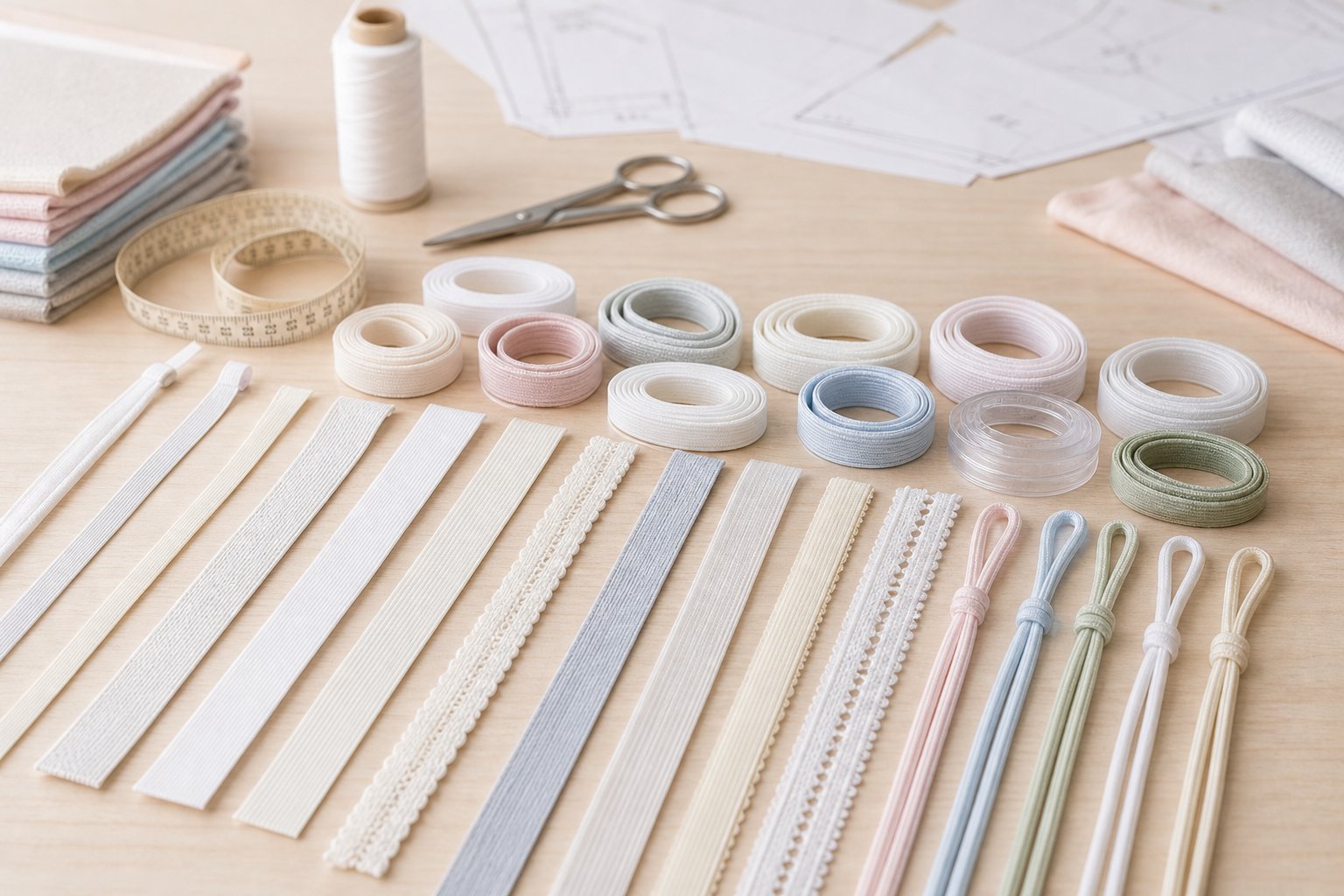
Where are elastic bands used on clothing?
Elastic bands may be used on waistbands, cuffs, trousers, sportswear accessories, innerwear, hats, drawstrings and decorative bands. The position close to the skin usually cannot be too thick or too hard; for the version wrapped in fabric, it depends on whether it will be too bulging and too easy to fold after sewing.
The waistband needs to be covered stably, the cuffs and trouser legs need to be rebounded and not pinched, and the drawstrings or decorative bands will pay more attention to the color, feel and appearance. If the customer only says "I want elastic bands", it is still difficult to judge. It is best to directly explain the wearing position and the material of the main fabric.
What do you think of elasticity, recovery rate and feel?
Elasticity is not just "very tight" or "very loose". You need to look at the length after stretching, the recovery after letting go, whether it is easy to loosen after washing or long-term use, and the feel when pulling it apart. Sportswear will focus on support and washability, casual wear will mostly want to be soft, and uniforms or workwear will often strike a balance between durability and cost.
If you have a sample on hand, you can measure the unstretched length, stretched length, width and thickness, and add the actual feel. If it is still under development, first talk about "should it be softer or firmer", "whether it fits snugly" and "will it be wrapped in cloth". It is more practical than directly specifying the elasticity number.
Clothing Elastic Belt Inquiry Specification List
| Use location | Underwear, waistband, cuffs, trouser legs, hat strings, drawstrings, decorative tapes or garment accessories. |
|---|---|
| Size | Use wider specifications for narrow width, medium narrow width or waistband; please provide millimeter width, thickness, feed length, cutting length or product length. |
| elasticity condition | Desired stretch feel, recovery rate, stiffness and durability requirements. |
| Appearance | White, beige, light gray, light pink, light blue and other light colors, or evaluate based on color card, cloth sample, brand color. |
| Finishing | Cutting, cutting, sewing, punching, end finishing, rolling or bagging. |
When making samples, look at these things first
- Whether it meets the wearing comfort and support requirements after stretching.
- Whether it is flat after sewing and whether it is easy to turn or curl.
- Whether the color can be close to the main fabric, lining or brand color, you should also pay attention to the color show-through of light-colored fabrics.
- Do you need a softer feel where the skin is in direct contact?
- Whether the cut ends require cutting, wrapping or other end treatments.
- Whether the mass production packaging method complies with the subsequent cutting or sewing process.
The easiest thing to miss about clothing elastics is the "putting on state". Just because the sample feels okay does not mean that it will be smooth when applied to the fabric. If you can provide the wearing position, photos of the main fabric, or existing samples, the judgment will be much more accurate.
Send elastic band inquiryFAQ
Do I have to specify the elasticity first when making an inquiry about elastic bands?
If the target specification is already available, it can be provided directly; if it is still in the development stage, it is recommended to first explain the purpose, wearing position, desired tightness and sample photos, and then judge the thickness, elasticity and feel.
Can the color of clothing elastics be customized?
Evaluation can be based on color cards, Pantone, fabric swatches or existing samples. Color, material and elasticity conditions will all affect sampling and mass production arrangements.