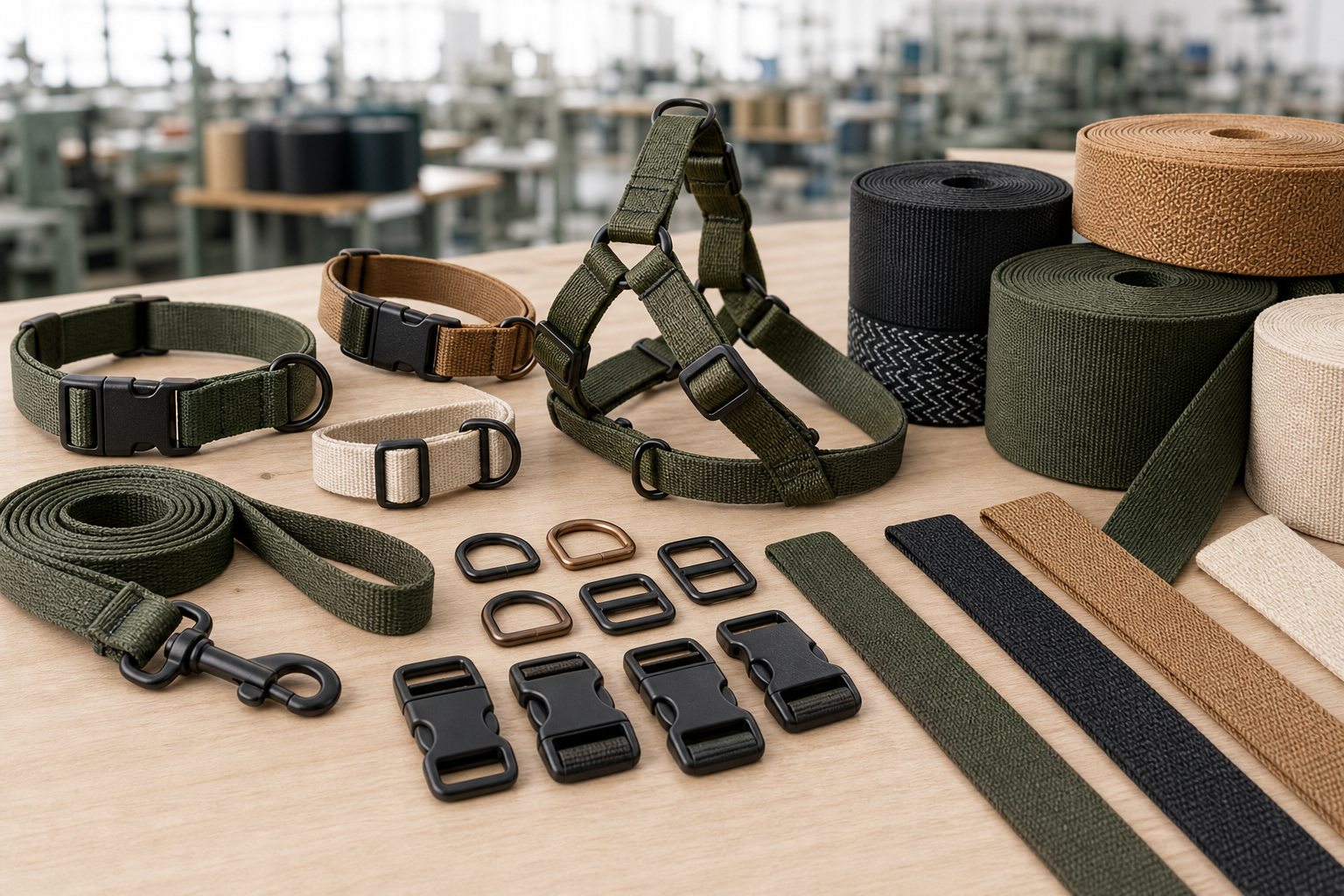
Where are webbing used in pet products?
Webbing may be used in collars, leashes, harnesses, outing straps, stroller straps and training accessories. The proportions, weight and feel of a traction device for small pets are different from those for traction for large pets, so you cannot just enlarge or reduce the width.
For products that will stick to the body, you should pay attention to whether the edges will be scratched and whether the thickness will be too hard; for products used for traction or fixation, you should pay attention to the tensile strength, hardware matching and sewing structure. When developing, it is more effective to first talk about "the pet's size, usage position, and force-bearing method" than just giving the color and width.
Material, width and wear resistance requirements
Both nylon and PP may be used in pet products. The tactile feel and wear-resistant performance of nylon are usually more suitable for leashes, collars and harnesses that value texture; PP straps are lighter in weight and easy to control in cost, making them suitable for general fixed straps or some accessories. The final choice depends on product positioning, target selling price and hardware weight.
The width is usually determined together with the pet's size, buckle size and appearance proportions. If it is too narrow, it may not have enough load-bearing and comfort, and if it is too wide, it may make small products look bulky, and you may even be unable to find suitable fasteners. If you already have hardware, providing the inner diameter or photos of the fasteners first will save a lot of time.
Don’t decide on fasteners last
A pet leash or collar is not just a strap, but is usually equipped with buckles, D rings, tri-glide buckles, hook buckles, adjustment buckles and sewn folds. The inner diameter of the hardware will affect the width of the webbing, the thickness of the hardware will affect the thickness after folding and the sewing method, and the weight of the buckle will also affect the overall feel.
If you already have a specified fastener, please provide the fastener size, material, photos or samples; if it has not yet been determined, you can also provide the product positioning and expected width first, and then evaluate the appropriate assembly method together.
Pet supplies webbing inquiry list
| Product type | Collars, leashes, harnesses, outing bag straps, stroller straps. |
|---|---|
| Use objects | Small, medium or large pets, whether they have higher pulling strength requirements. |
| Size | Width, thickness, finished length, cutting length and folding length. |
| Hardware | The size and material of buckles, D rings, tri-glide buckles, hook buckles, and adjustment buckles. |
| Appearance | Color, brand colors, whether printed graphics or identification labels are required. |
| Finishing | Cutting, cutting, sewing, punching, assembling, bagging or other packaging methods. |
The most common back-and-forth confirmation for pet products is whether the buckles and straps match. If you can look at the buckles, D rings, hooks or existing samples together from the beginning, you won't have to wait until the strap is sampleed to find out that the slip, buckle or foldback thickness is wrong.
Send Pet Supplies Webbing InquiryFAQ
Does the webbing used for pet leashes have to be matched with hardware?
Check them together. The size of the buckle, D ring, tri-glide buckle or hook will affect the width, thickness, fold length and sewing method of the webbing.
Can the webbing used for pet collars be made in brand colors?
Can be evaluated based on color cards, Pantone, samples or brand color direction. If printed Patterns are required, it is also recommended to provide artwork and estimated width simultaneously.